
AMSilk X Balenciaga: Fashion Success for an Understated Executor
Two garments from Balenciaga's Spring 2026 collection are made with AMSilk's bioengineered silk protein yarns. They are available now on Balenciaga’s website as ongoing SKUs from a named supplier relationship. In a sector where partnerships are announced routinely but rarely arrive on shelves, this is an unusual outcome. In my previous analysis of commercialization in biomaterials, I identified AMSilk as an example of what I called the Understated Executor: a company whose proof consistently precedes its story. This Balenciaga/AMSilk partnership is what that trajectory looks like when it reaches commercial luxury in the fashion industry. I interviewed AMSilk’s Head of Marketing and Communications, Isabel Rosenberger, to learn more about this partnership.
Note: Every article I've found covering this partnership links to Balenciaga's homepage, not the products themselves. This is a small detail, but it's indicative of the fact that in biomaterials coverage, the announcement is the story. The product rarely is. I believe the products are also worth celebrating. So, here they are:
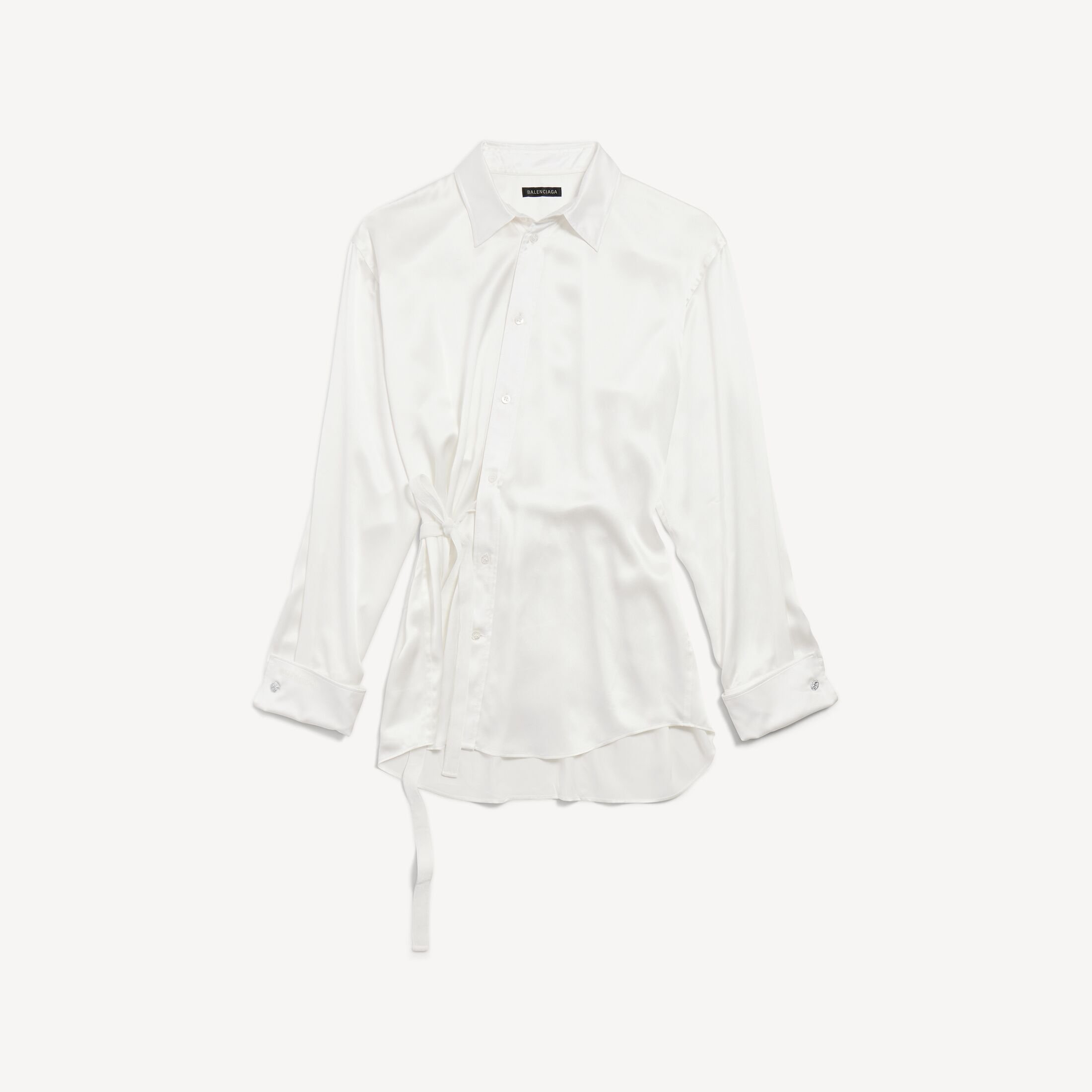
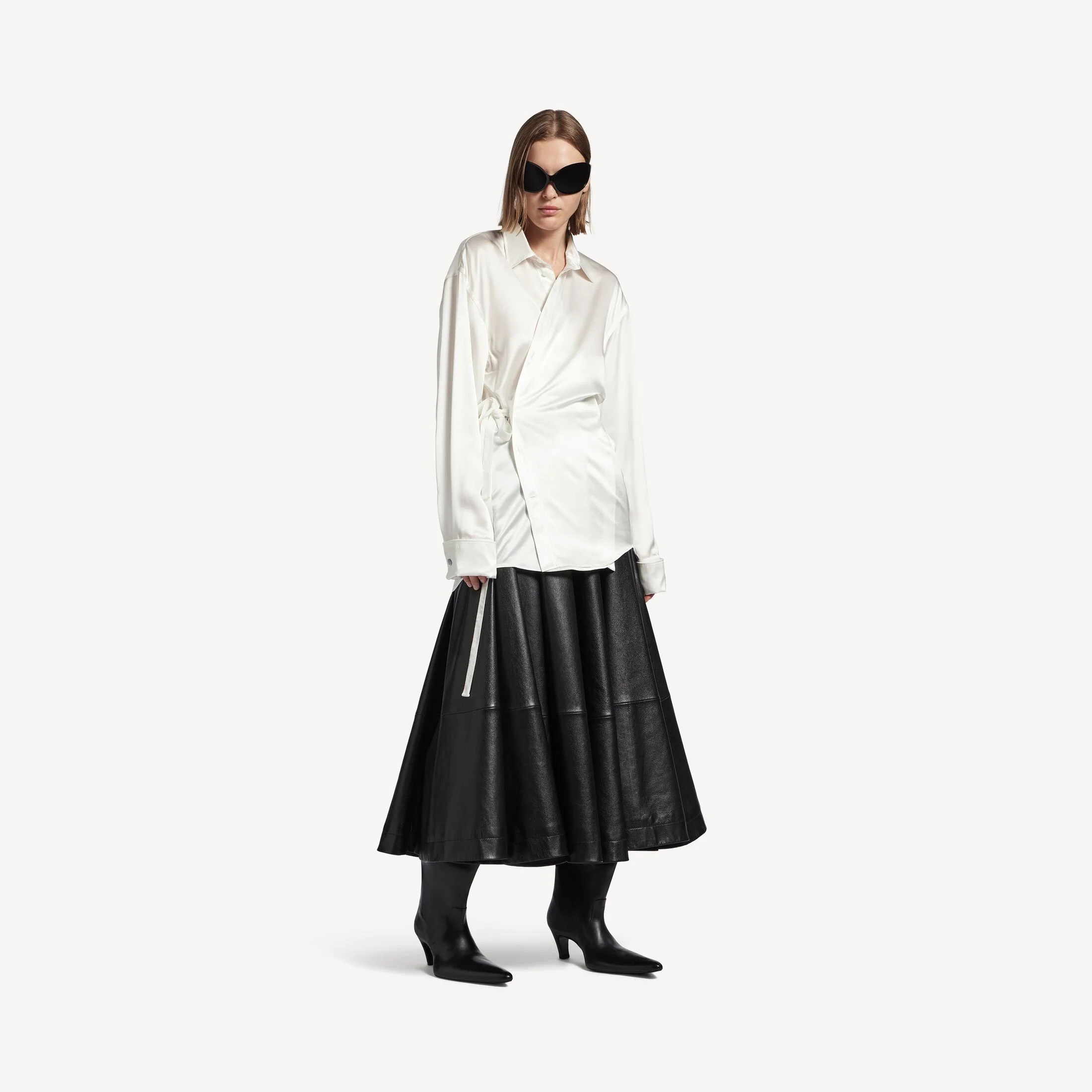
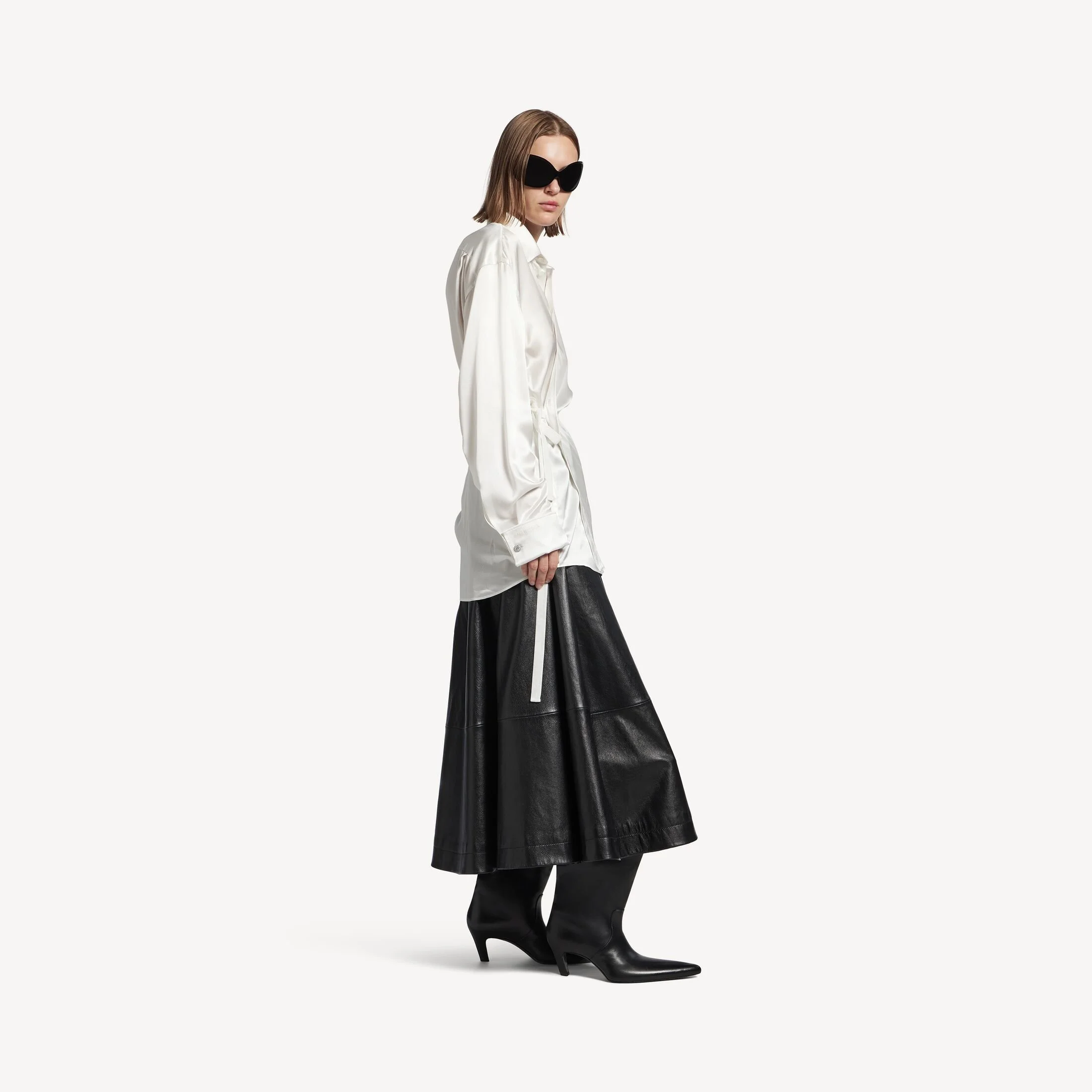
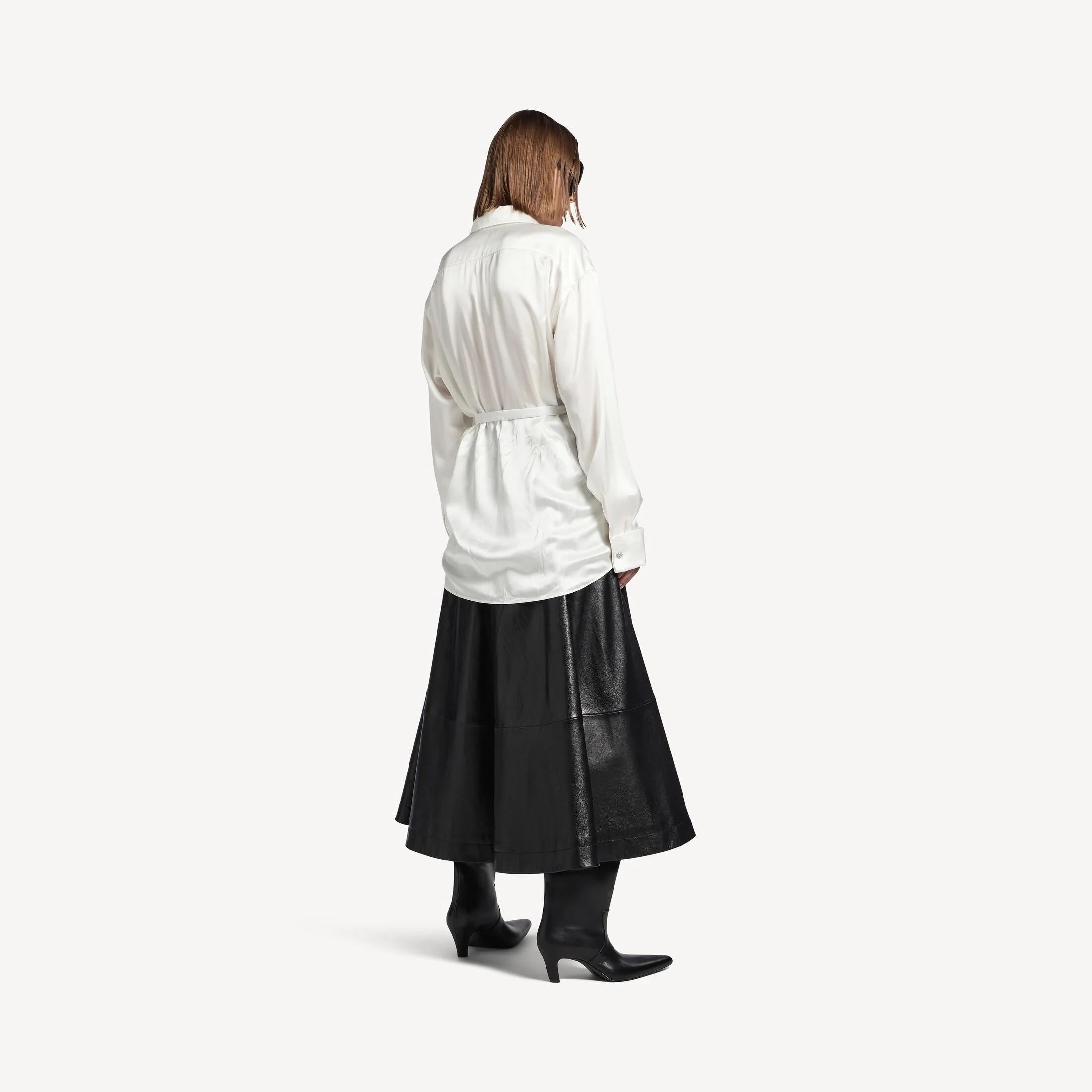
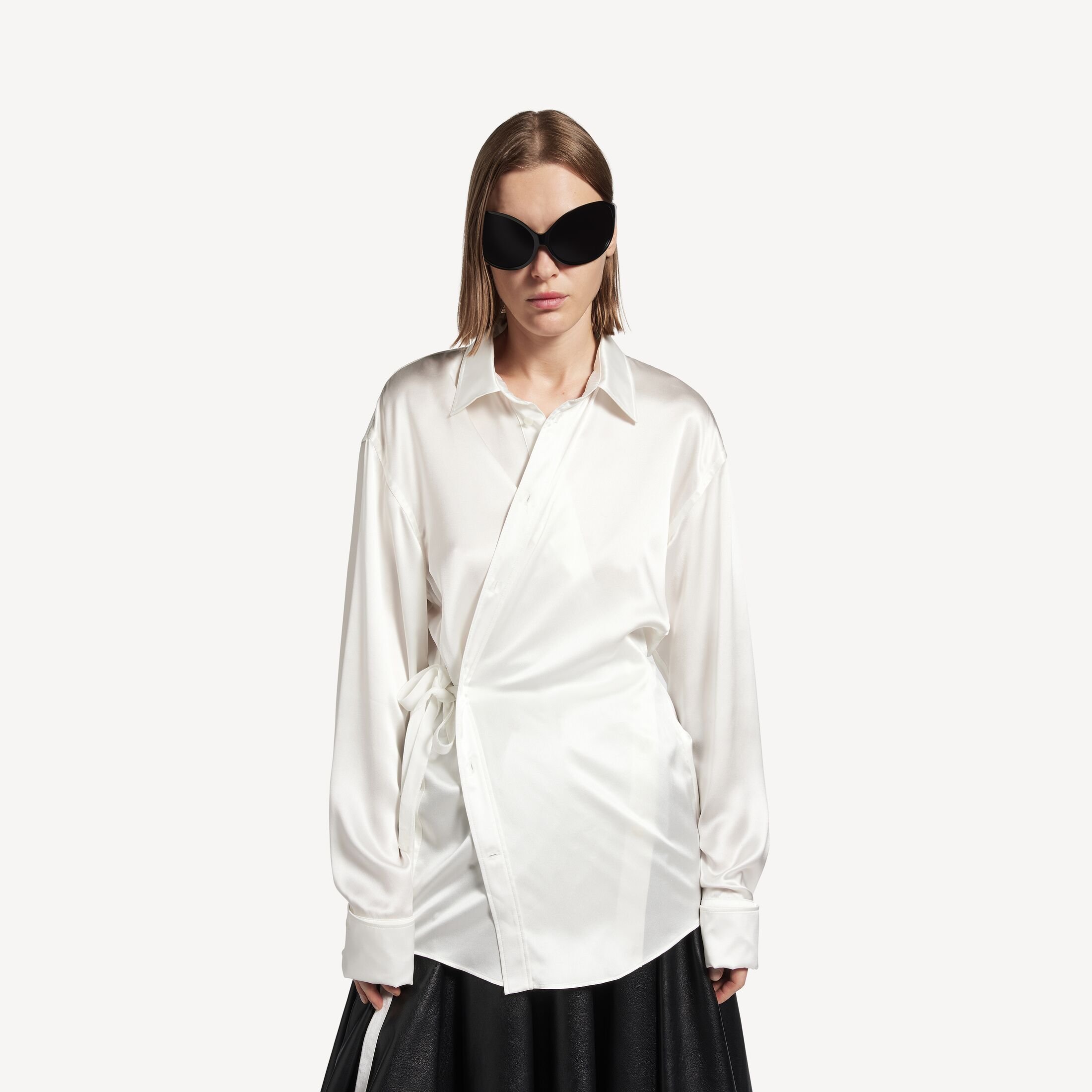
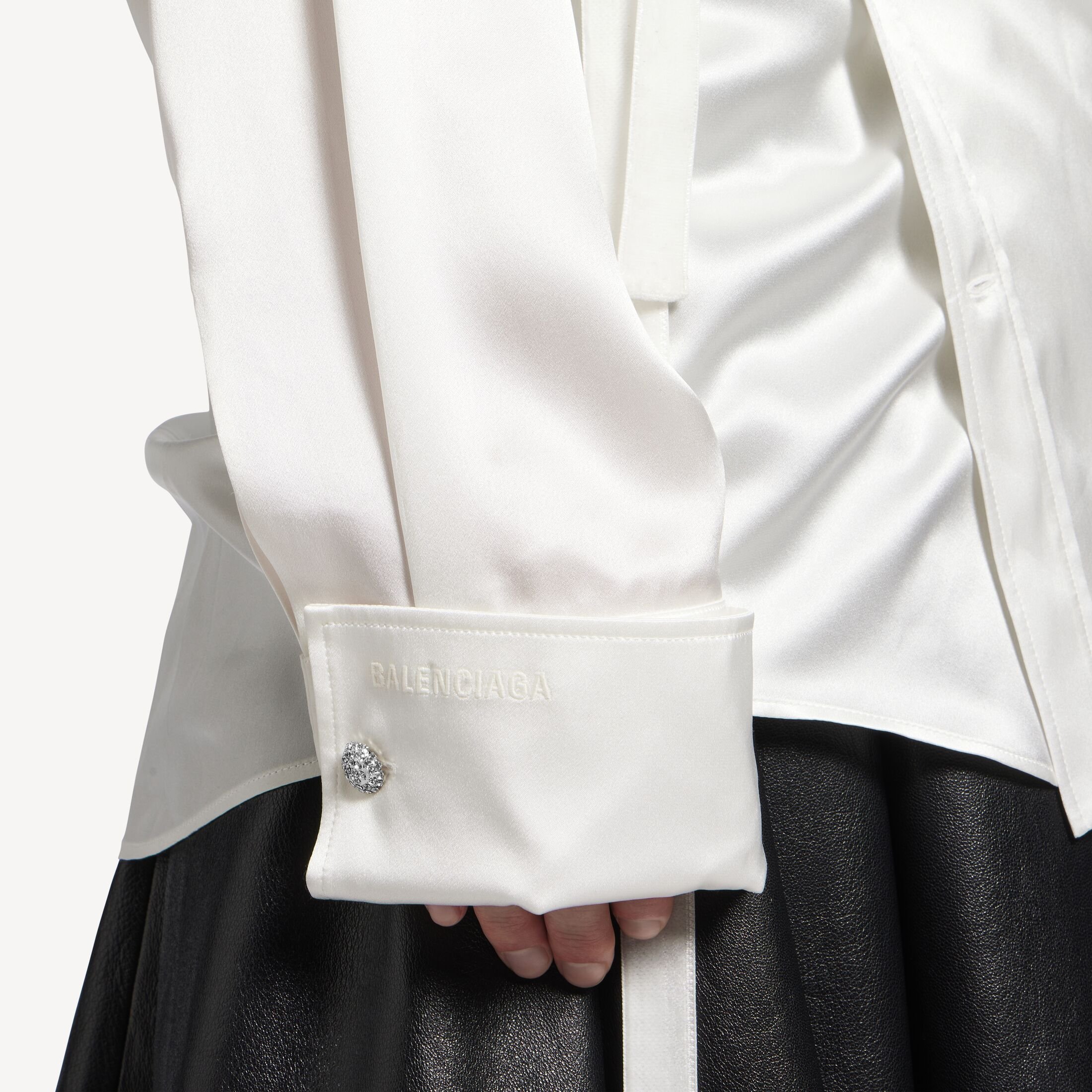
Balenciaga’s Women's Wrap Shirt in Ivory is available for sale on their US site for $1,990. (Product images sourced from Balenciaga’s website.)
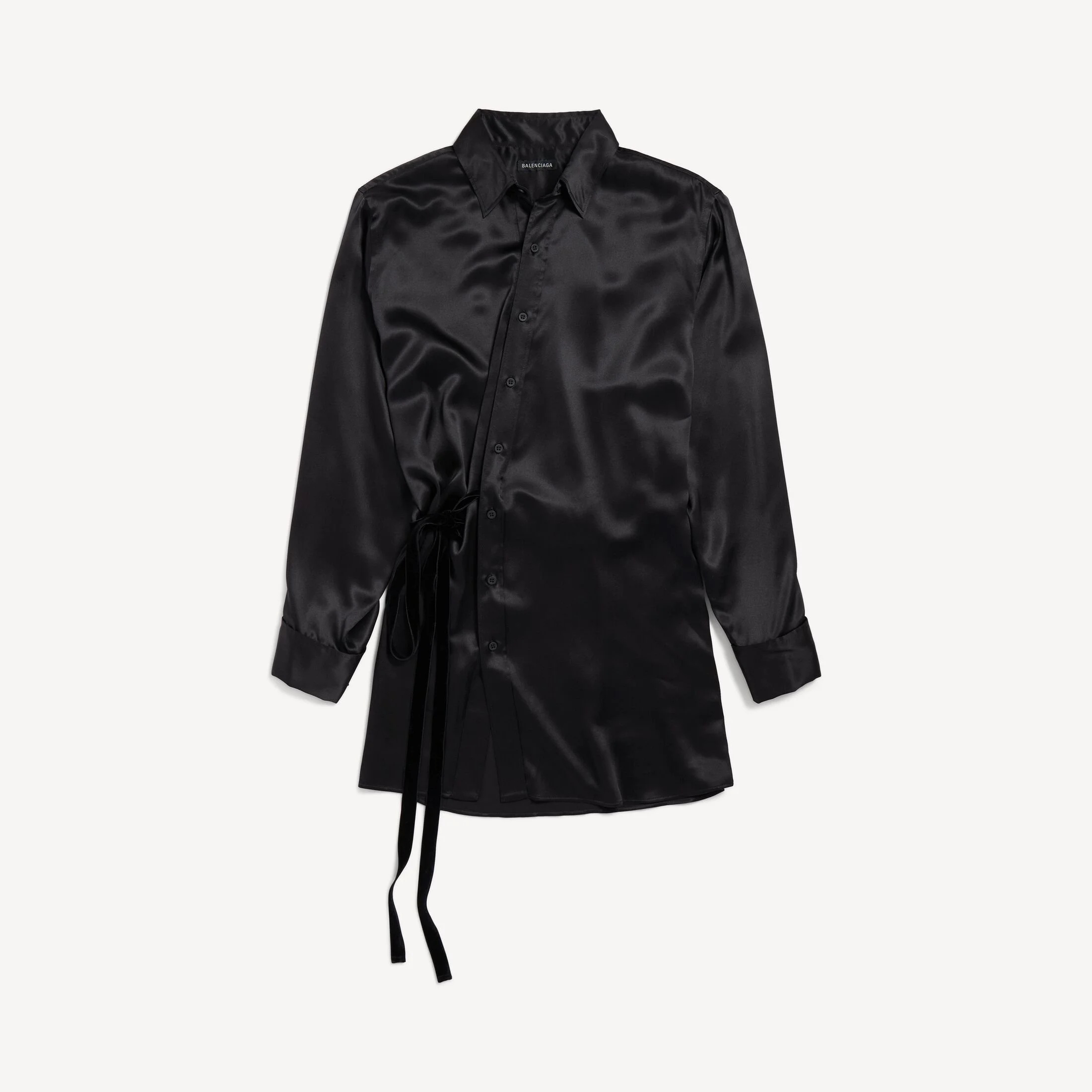
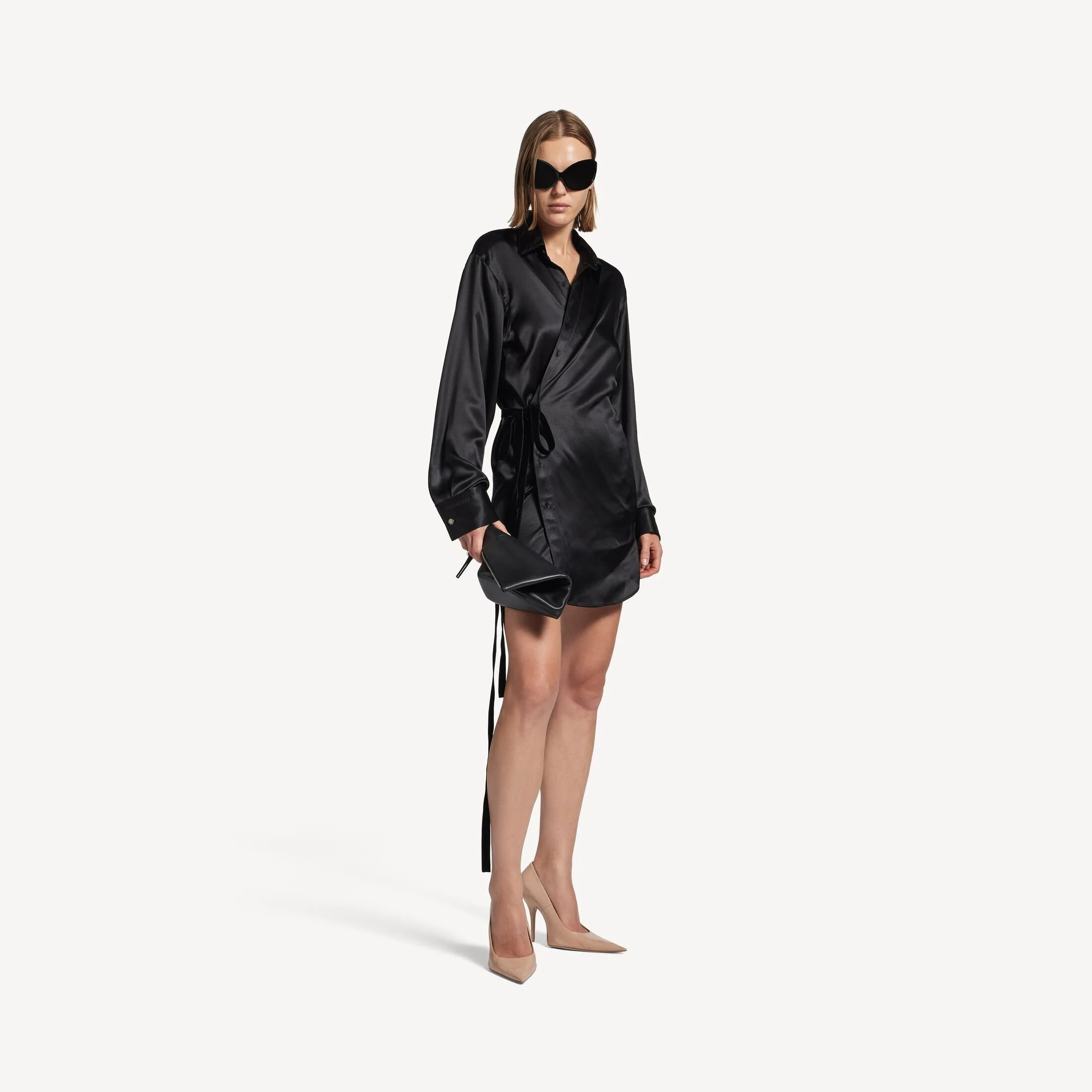
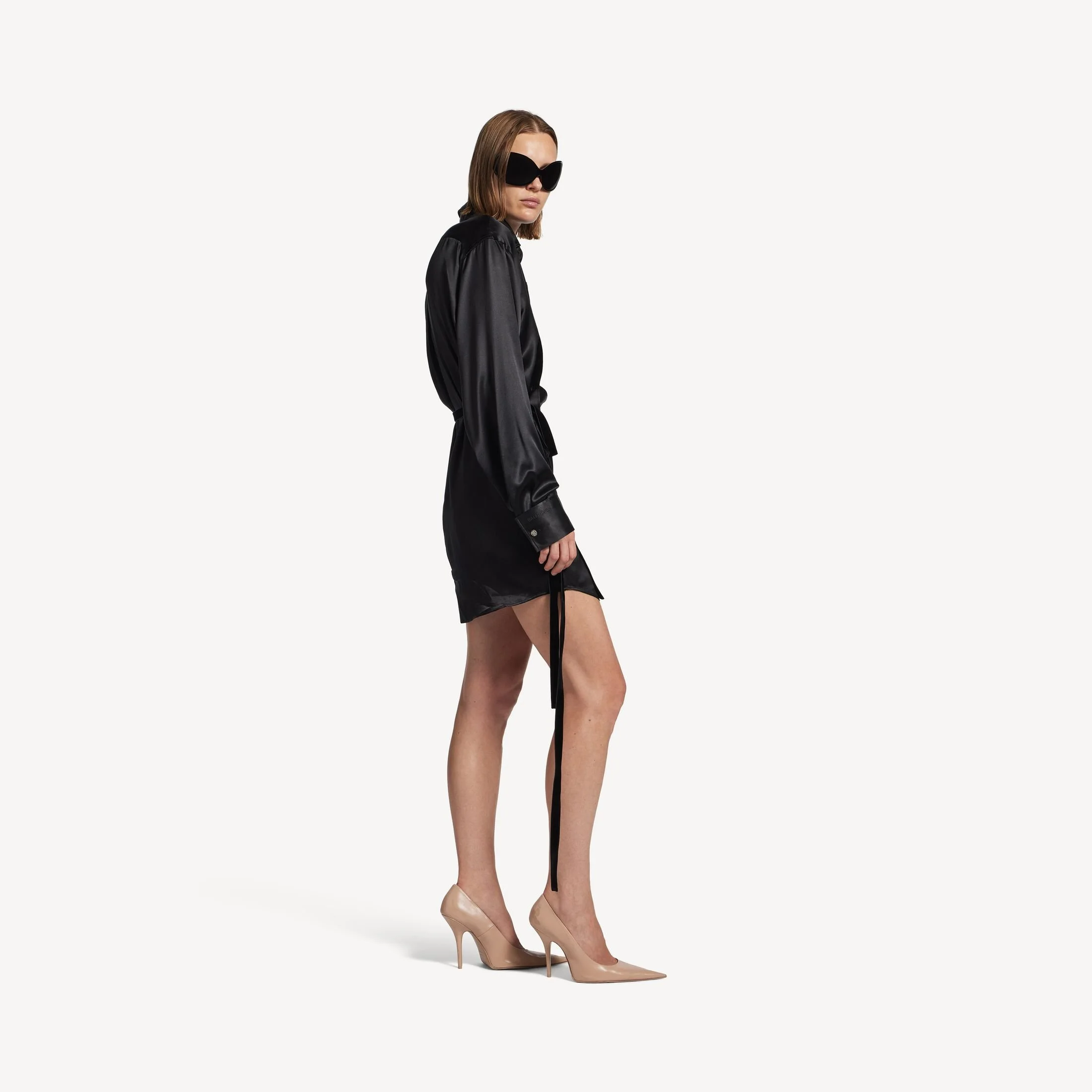
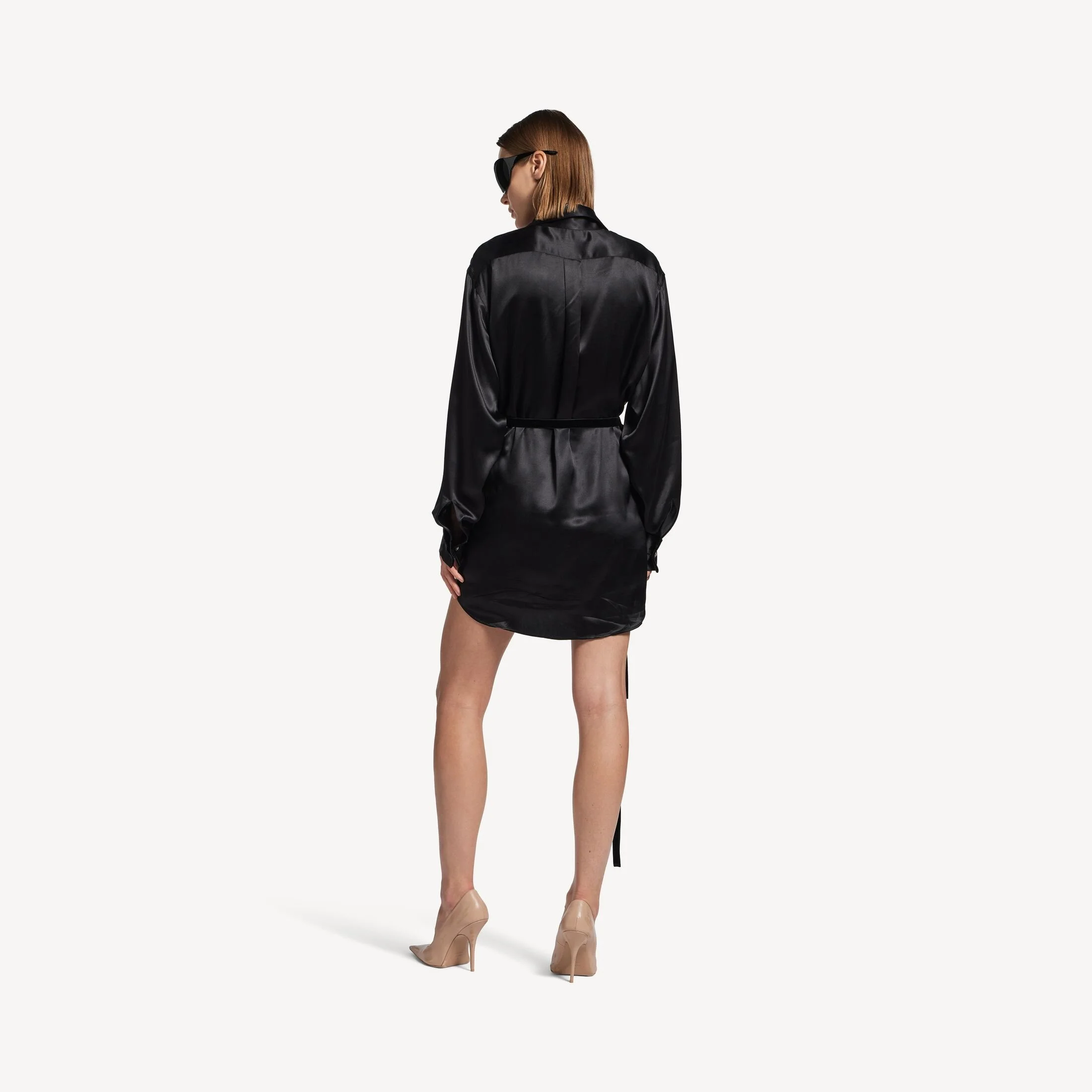
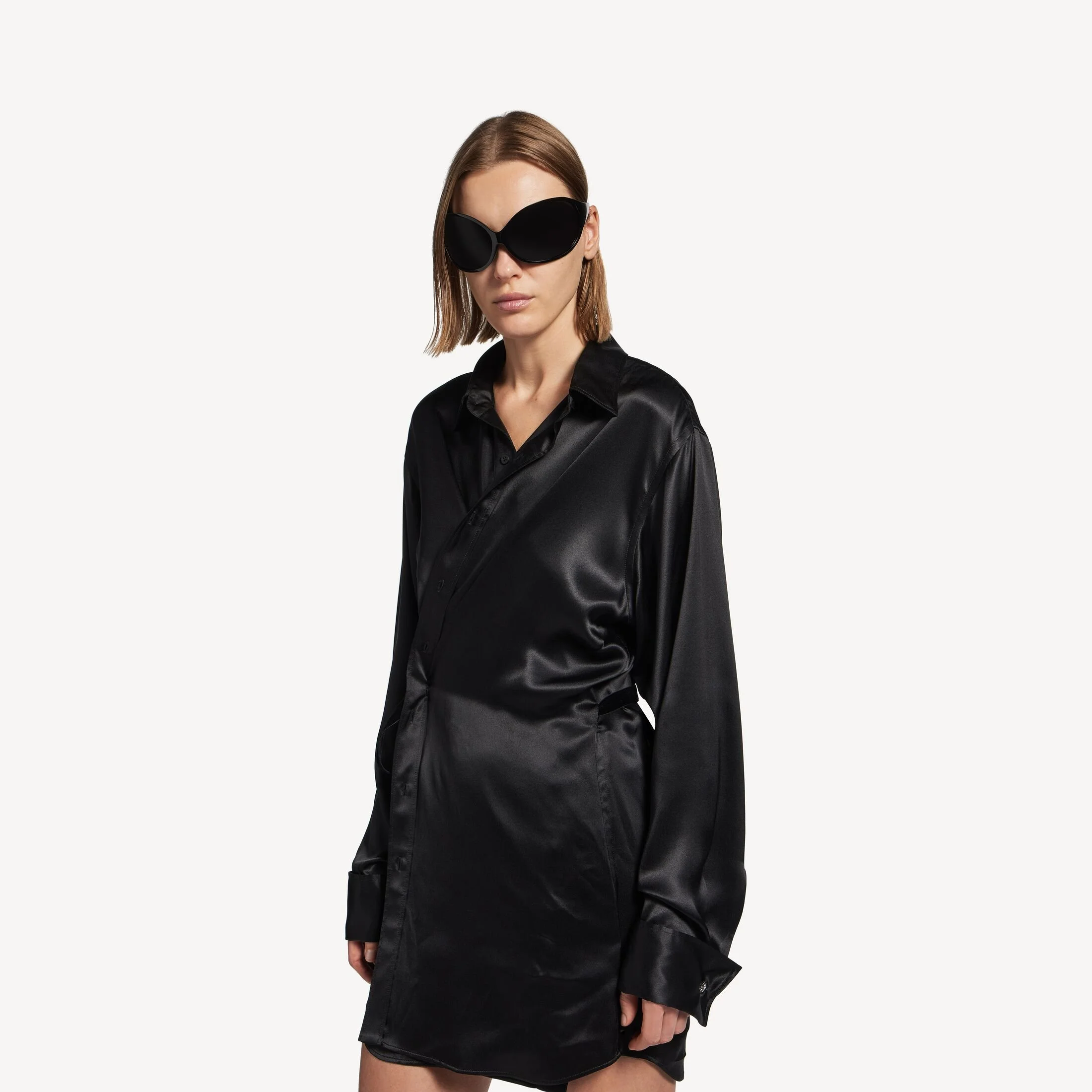
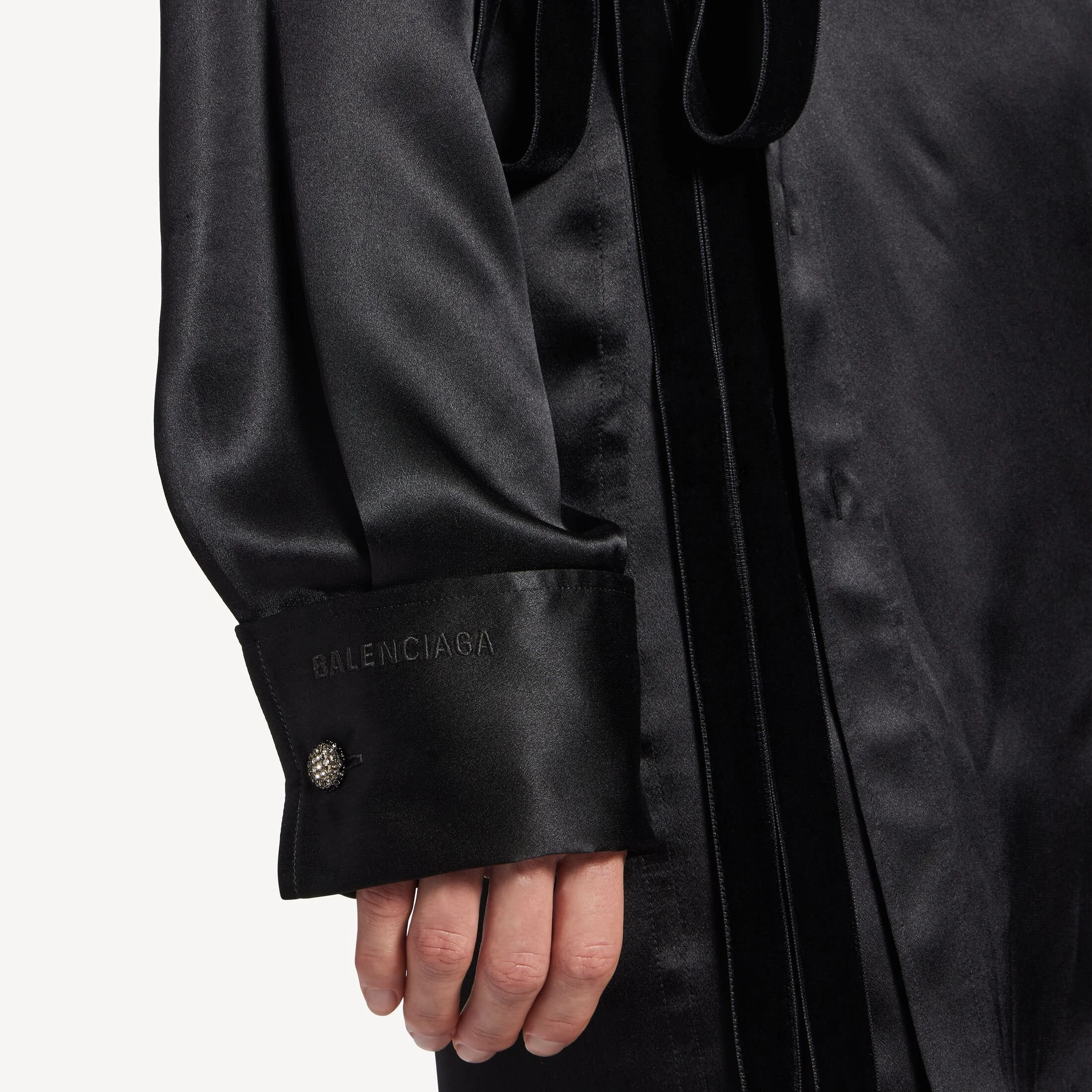
Balenciaga’s Women's Wrap Dress in Black is available for sale on their US site for $2,250. (Product images sourced from Balenciaga’s website.)
This partnership arrives at a moment when the biomaterials sector is bifurcating. Bolt Threads has been delisted from NASDAQ. Spiber, one of AMSilk's closest peers in recombinant protein fibers, has restructured under new ownership following a near-fatal debt crisis. But at the same time, Modern Meadow has been converting partnerships into products, with INNOVERA now in Allbirds footwear and a European production joint venture with Heller-Leder. (In a development that underscores the volatility of the sector's brand landscape, Allbirds sold its footwear assets and pivoted to AI infrastructure in April 2026, just two months after the Terralux launch. Whether those products survive under new ownership remains to be seen.) Kintra Fibers just secured a commercial-scale manufacturing partnership with Selenis to produce its biobased polyester alternative. The sector is splitting along an operational fault line. The companies now pulling ahead share a common logic: drop-in materials engineered for existing manufacturing infrastructure, scaled through established production partners rather than proprietary facilities. That doesn't mean vertically integrated approaches can't work… only that they haven't yet. And paradoxically, the commercial traction from the drop-in cohort may be extending the timeline for everyone else. Each successful product on a shelf counteracts the signal damage from each delisting or restructuring, giving companies pursuing harder paths more runway than the original front-runners had. As Isabel put it to me: "Every company that's not going to make it is a bad signal into the market." The inverse is also true. AMSilk's Balenciaga partnership is one of very few data points the sector can currently point to where a biomaterials company followed through on the full commercial sequence: development, iteration, production, and a product a consumer can actually buy (so long as they have a Balenciaga-sized wallet).
AMSilk as an Understated Executor
In Part 2 of my $300M Wake-Up Call series, I introduced the Understated Executor as one of five commercialization archetypes in biomaterials.
The archetype describes a set of choices that compound into leverage. AMSilk stayed quiet long enough to retain messaging flexibility: their founding narrative was scientific and even a bit rooted in mysticism (“the Spider-Man narrative,” as Isabel Rosenberger put it), which later shifted to sustainability as that differentiator rose in a wave of popularity and promises, and has now evolved again toward performance and supply chain resilience. Each of these framings is true, and AMSilk had a huge advantage in being able to choose which one to lead with. A company that had locked itself into a consumer-facing sustainability brand in 2015 would not have had that room to adapt.
But narrative flexibility alone doesn't explain the timeline. AMSilk was founded in 2008. The Balenciaga products arrived in late 2025. That's seventeen years. Isabel was candid about why: “These were the technical guys, the scientists behind that story. They never spent a thought on how this could be made commercial.” The founding team had the science, but not the people who could translate it: managers with industry expertise, commercial strategists who could identify which markets to enter first, and what Isabel described as “the connectors between business and development and innovation.” This is not unique to AMSilk. The biomaterials sector is full of technically brilliant founding teams who are years into development before anyone with commercial fluency joins the organization. The gap between having a viable material and having the organizational infrastructure to bring it to market is one of the least discussed timelines in the sector, and one of the most consequential.
This gap persists because the incentive structures don't correct for it. Funding in biomaterials flows toward scientific milestones like patent filings, successful fermentation runs, or pilot-scale outputs. These milestones are legible to investors who evaluate technical risk. But the organizational work that converts a proven material into a commercial product (identifying the right market entry point, building a pricing architecture, understanding what a brand partner's procurement process actually requires) is a capability not often measured in investor proof points. As a result, companies routinely reach the point where a brand partner expresses interest and they then discover they don't have the internal infrastructure to respond. They have a material. They don't have a go-to-market function; Nobody in the organization knows how to run a commercial development process. This is the gap where most biomaterials companies lose time they cannot afford.
In addition to being tactically ready to convert partnerships, AMSilk also optimized their trajectory by scaling asset-light, partnering with Evonik rather than building their own manufacturing. “We never built our own facilities,” Isabel told me. “We always relied on production partners, which not only made us scale up asset light, without a lot of capex invested, but also [bought us the industry expertise].” Importantly, AMSilk also built drop-in technology so their material would work with existing textile infrastructure without requiring partners to retool. Isabel called this “a prerequisite to actually be successful.”
The same logic extends beyond manufacturing. In January 2024, AMSilk partnered with 21st.BIO, a precision fermentation specialist, to optimize its production strains for industrial-scale output, and significantly reducing their production costs. Rather than building that bioprocess R&D capability in-house, AMSilk bought access to forty years of fermentation expertise. This is asset-light strategy applied not just to physical manufacturing but to the science itself, and it stands in direct contrast to the approach that sank several of the companies I profiled in Part 1, which committed hundreds of millions to proprietary facilities while still working to optimize their processes for functionality, scale, and value. This sentiment is corroborated by AMSilk's CEO, Ulrich Scherbel, “By partnering with 21st.BIO, we are succeeding where so many have struggled, delivering high performance precision fermentation at the right quality and cost parameters, and at a true industrial scale.”
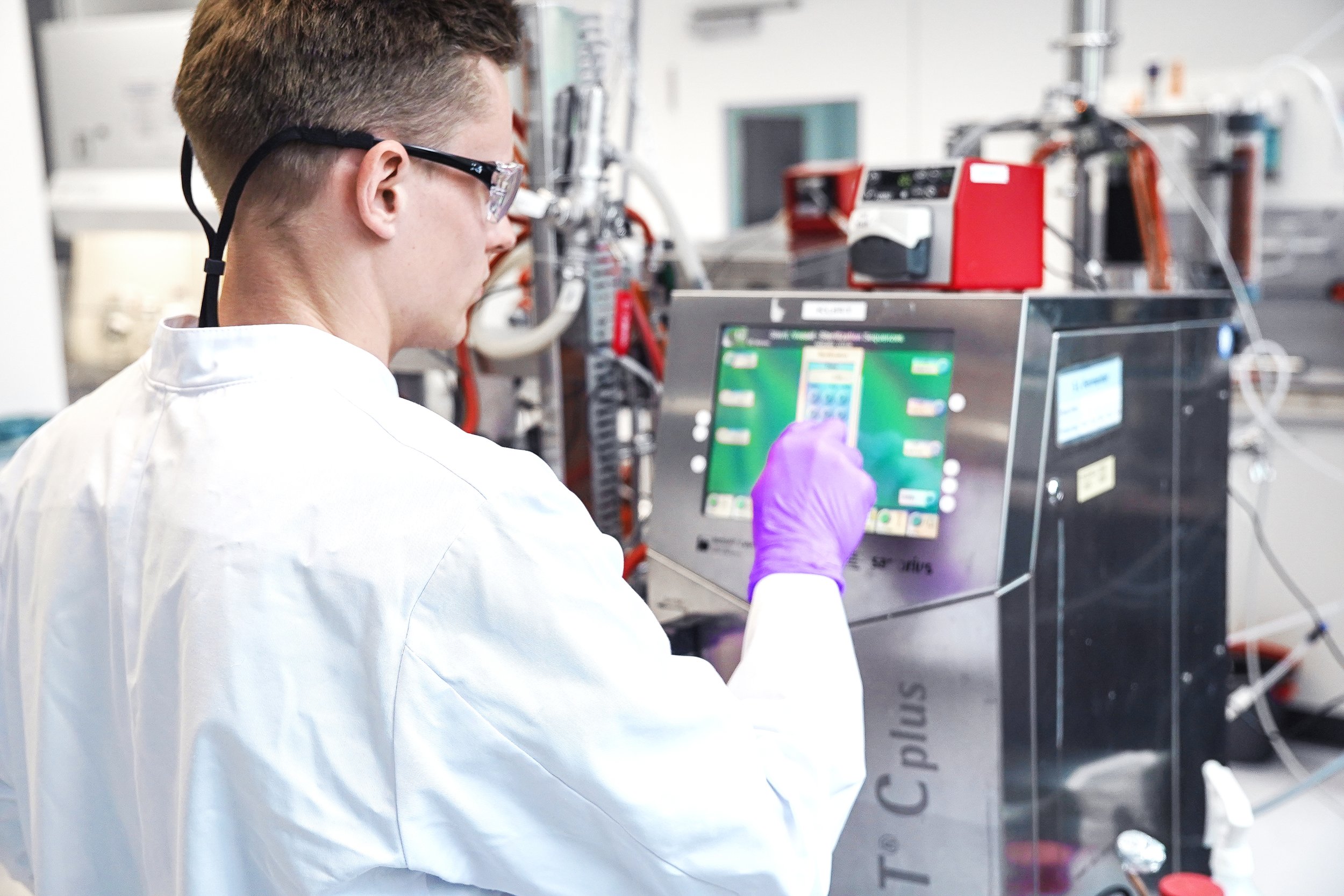
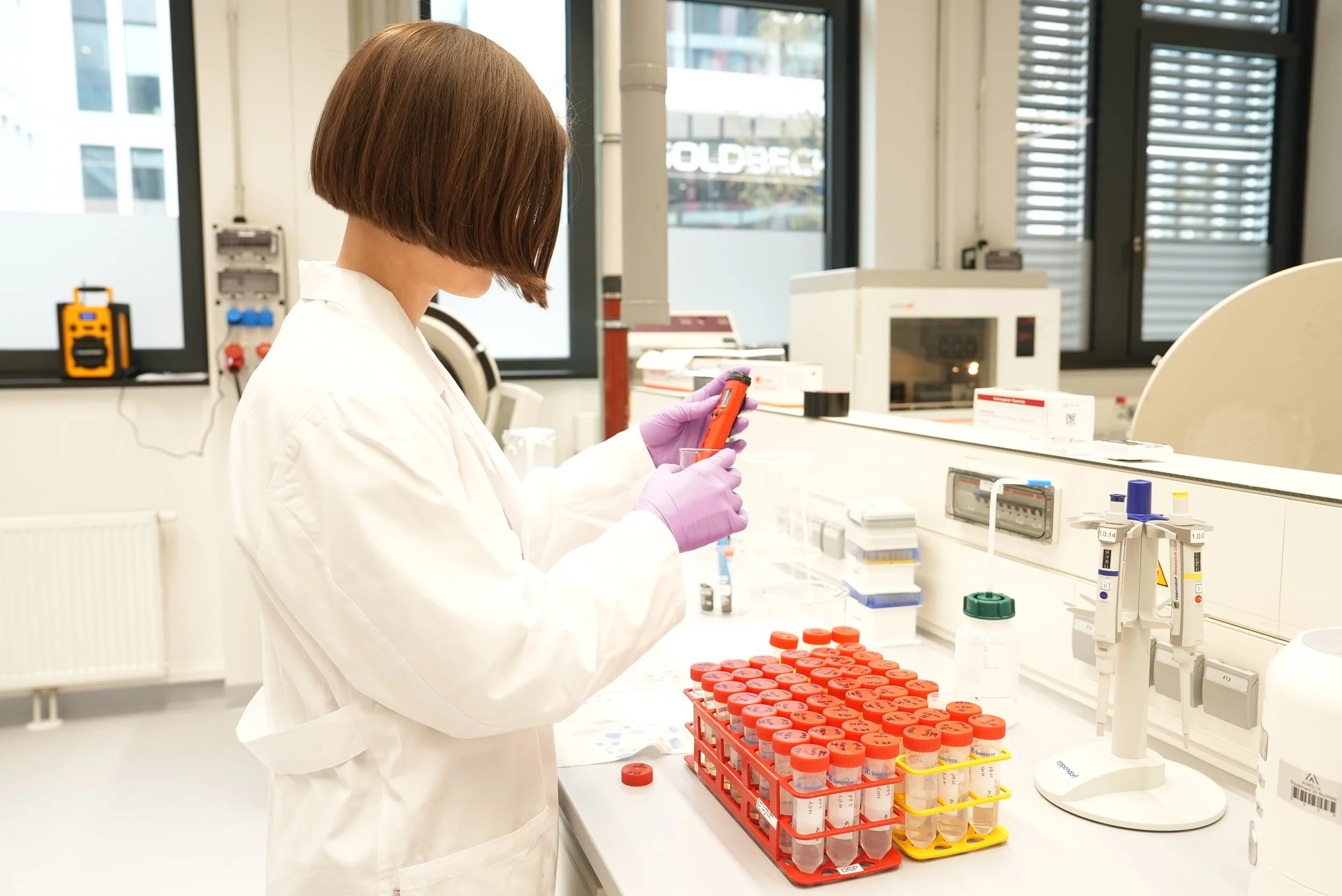


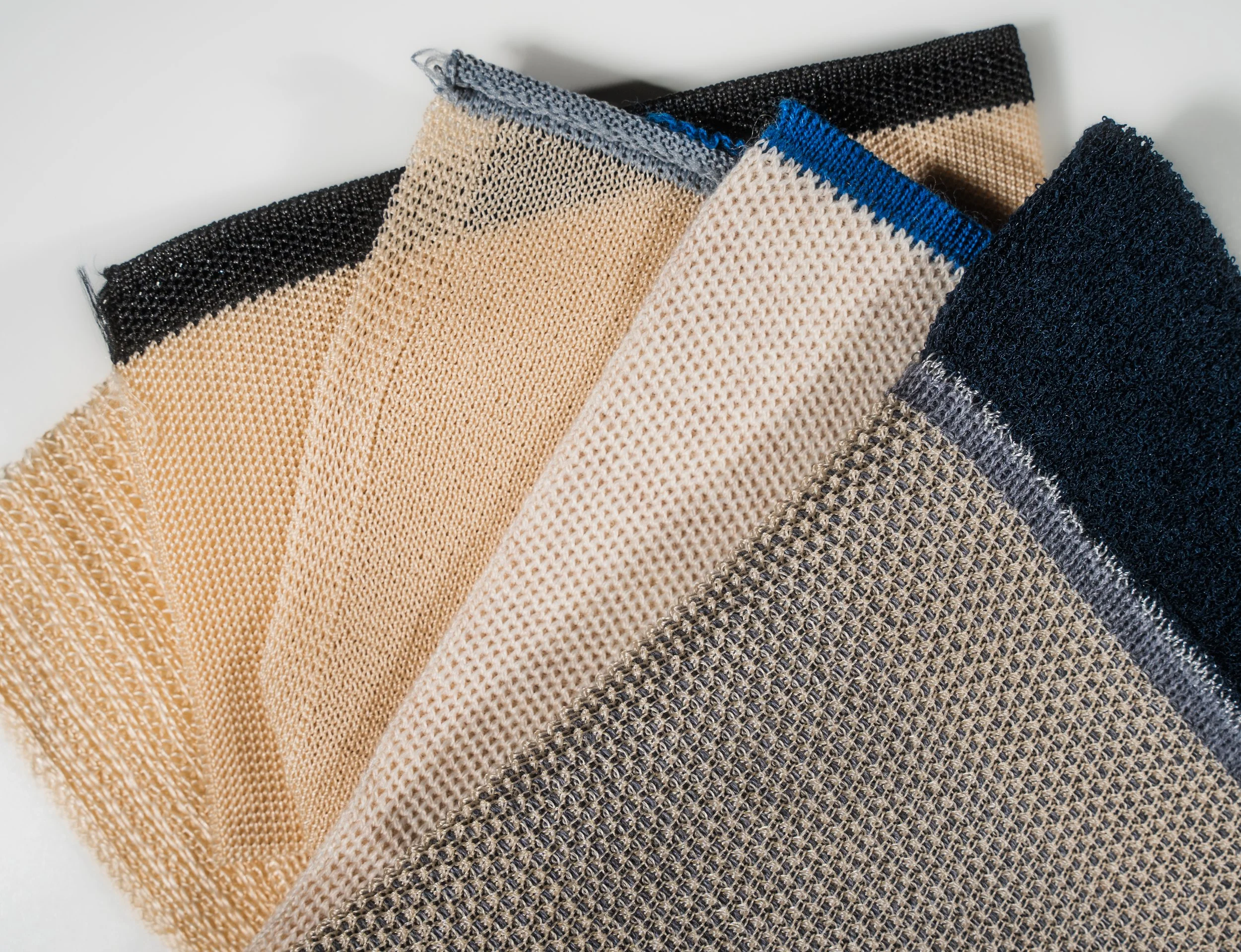
Images provided by AMSilk.
By the time luxury fashion expressed interest, AMSilk had already survived the gauntlet of Mercedes, Airbus, and OMEGA. That's a credibility profile that luxury houses understand instinctively, even if the application is different. These weren't just sustainability partnerships. Automotive and aerospace evaluate on performance under stress, consistency across production runs, and whether the supplier can deliver reliably at spec over time. The sustainability story is irrelevant if the material fails a durability test. This is the sequencing that the biomaterials sector keeps getting wrong; sustainability is a differentiator only after performance credibility is established, not before. AMSilk's own narrative shifted toward sustainability when the market rewarded it. However, that shift was a communication layer over performance proof that already existed. Not a substitute for it. The companies that lead with sustainability positioning before they've proven performance in demanding contexts are building on a foundation that doesn't hold weight. AMSilk didn't need to chase the Balenciaga partnership. Instead, they had built the quiet and confident reputation that attracted it.
Quality Iteration: The Quiet Differentiator
The biomaterials conversation tends to focus on fundraising, brand partnerships announced, and sustainability metrics. It rarely focuses on what happens between the announcement and the product (if a product arrives at all). The press cycle rewards announcements, and investors reward milestones that can be timestamped... not the slow, unglamorous work of adapting a material to meet a partner's specifications. This gap in the conversation creates a distorted picture of what commercialization actually requires, and it leaves companies without visible models for what patient development looks like. The result is that companies calibrate their timelines and their communications to the rhythms of fundraising rather than product development.
Luxury-grade due diligence extends well beyond the material itself: guaranteed production volumes, verification of every sustainability claim through independent certifications and testing, and demonstrated supply chain reliability. The process is rigorous by design. A luxury house staking its name on a novel material cannot afford an inconsistency that reaches a customer. That's a standard most biomaterials companies have never been subjected to, in part because most partnerships dissolve before reaching this stage. Regarding the development and due diligence process with Balenciaga, Isabel stated, “[AMSilk’s product] really had to live up to the excellence that Balenciaga promises their customers.”
The Importance of Internal Champions
Biomaterials companies often talk about brand partnerships as if they were institutional decisions (like, “Balenciaga chose to work with AMSilk”). But inside large organizations, projects live or die based on whether someone is willing to push them through internal resistance or uncertainty. The Balenciaga partnership followed a more structured route than most: it was initiated through Kering's materials innovation infrastructure and advanced through cross-functional collaboration between sustainability, innovation, fabric sourcing, and design. Notably, the creative leadership was receptive because there was already an existing affinity for silk as a material and a dissatisfaction with conventional silk production methods. That alignment between institutional process and design-level openness is unusual.
Designers at established houses don't typically go looking for biomaterials, because biomaterials don't yet offer them something they can't get elsewhere in terms of what the material does. A designer working on a silk blouse has access to silk. It drapes the way they expect, it takes dye the way they know, and their atelier has decades of experience cutting and finishing it. A bioengineered silk protein yarn may match or eventually exceed those properties, but it doesn't unlock a design possibility that didn't exist before (not yet, anyway). Looking back at ingredient branding’s darling, Gore-Tex, one can see it succeeded with designers and product developers because it offered a mechanical function that solved a problem no existing material could solve. It wasn't a replacement; it was a capability. Biomaterials, as they're currently positioned, are asking designers to swap one input for another and trust that the swap is worth the risk. That's a harder sell than offering them something new to design with, and it explains why adoption depends so heavily on internal champions and compliance mandates rather than on designers pulling these materials into their own work.
Ongoing Partnership vs. the Capsule Trap
One of the patterns I identified in my earlier analysis was the capsule collection trap: a biomaterials company partners with a fashion brand, produces a limited run, gets the press hit, and then the relationship ends. The brand has its sustainability story. The material company has its logo slide. But nothing scales.
This happens for several reasons. Sometimes the material isn't ready for volume production. Sometimes the brand was never interested in more than a marketing moment. But it is also a glaring example of leverage asymmetry. A biomaterials company entering a luxury brand partnership typically needs that brand's credibility more than the brand needs their material. The partnership is simultaneously a commercial relationship and the biomaterials company's most important proof point for investors. That dual function distorts every negotiation. The material company can't push back on timelines, can't insist on being named, can't demand commitment beyond a single season because the logo on their pitch deck is funding their next twelve months of operations. The brand knows this. The result is that many “partnerships” are structured from the start as one-offs, with material innovators bound by oppressive terms that perpetuate long after the deal has gone stale.
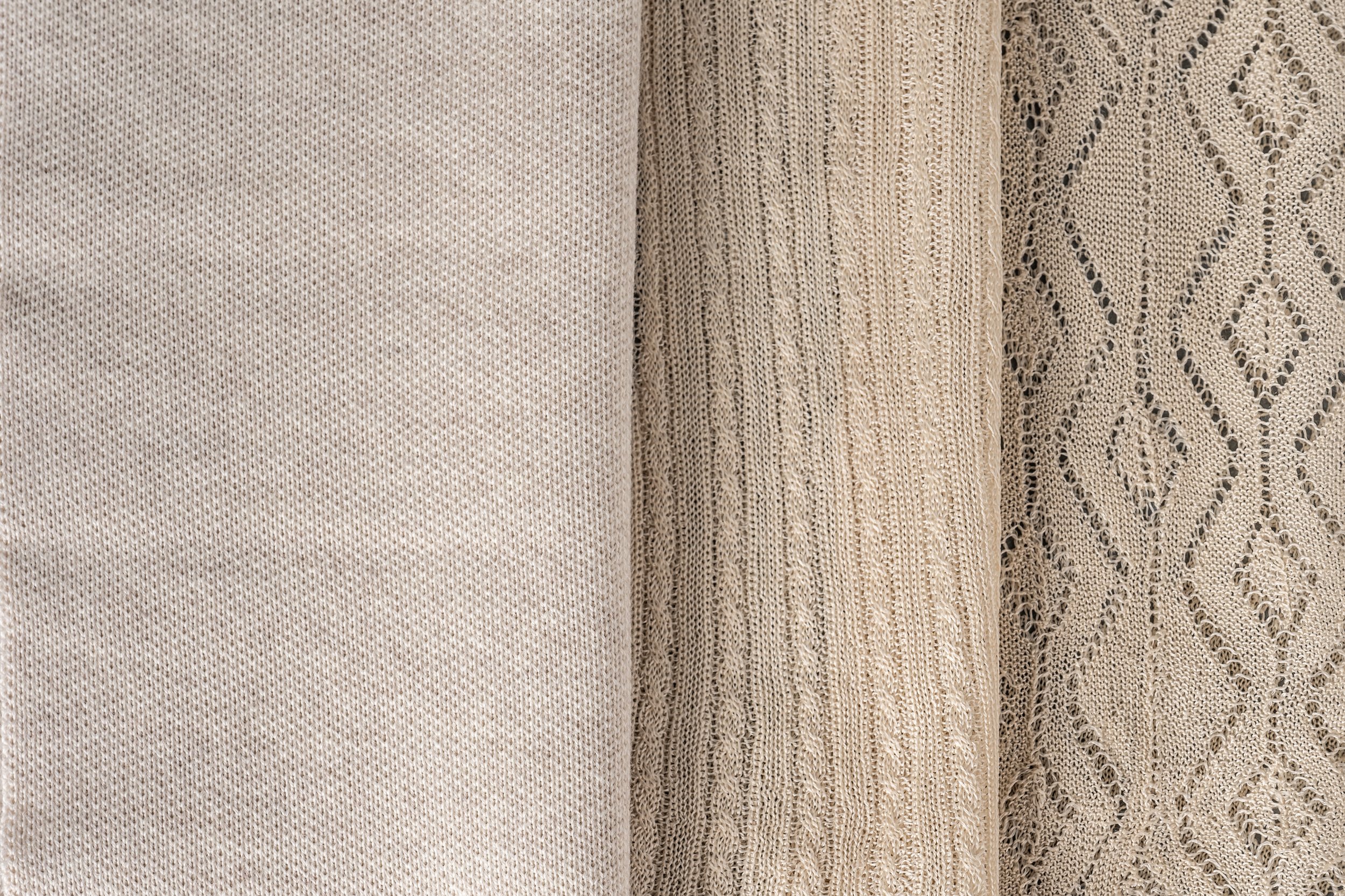
A luxury brand's supply chain runs on predictability. They plan production months in advance, commit to quantities across sizes and colorways, and need suppliers who can deliver at consistent volume on a defined schedule. A biomaterials company producing intermittently (a kilogram here, a batch there) isn't a supply chain partner; it's a research project. As Isabel stated regarding the success of the Balenciaga partnership and AMSilk’s commercial pathway, “They need to rely on production volumes that they can plan with.”
Image provided by AMSilk.
Being Named: Crossing a Threshold
Luxury brands typically absorb supplier innovation and claim it as their own - the leather comes from a tannery no one names, or the hardware comes from somewhere in Italy. The mystique depends on the brand appearing to conjure the product whole, not assembling it from credited partners. AMSilk got named.
This stands in contrast to how other industries handle supplier attribution. Isabel described AMSilk's ongoing collaboration with Mercedes, where the material is used but the company is not named publicly. "The automotive industry has always been quite innovative," she told me. "Before some innovation gets a new standard, there is a lot of years of development and testing, and they would not reveal the company." She drew an analogy to Recaro, the sport seat manufacturer, which was incorporated into cars anonymously for years before the brand name was surfaced, and only once it added value to the product in consumers' eyes. In automotive, naming follows proven adoption. In fashion, naming (if it happens at all) arrives at launch or never. There is no intermediate stage because fashion operates on seasonal cycles. A material either enters the collection narrative at launch, or the collection moves on and the moment is gone. There's no multiyear production run during which a supplier can quietly prove itself and earn public attribution over time.
On Balenciaga's product pages, the material is described under the product name as “advanced biotech silk satin” AMSilk is also credited by name in their sustainability dropdown on the individual product pages. In that dropdown, Balenciaga states, “This Balenciaga product has been manufactured using a new class of bioengineered materials, inspired by spider silk and produced by using a unique process of precision biofermentation. It offers an innovative, plant-based alternative to conventional fibers, sourced from renewable materials. By collaborating with AMSilk™, Balenciaga is bringing its contribution to the fashion transformation through biotechnologies, creating exciting opportunities for advanced materials in luxury.”
Balenciaga has a history of embracing material innovation. Cristóbal Balenciaga himself co-developed silk gazar with Swiss manufacturer Gustav Zumsteg specifically to achieve the sculptural forms his designs demanded. More recently, the house debuted Gozen's Lunaform under creative director Demna, in a Maxi Bathrobe Coat for its Spring/Summer 2024 collection. Regarding his Autumn/Winter 2024 collection, Demna said, “We can actually have the luxury of time, in order to experiment. To not only use existing couture techniques but come up with new things that can enrich those techniques.” When Pierpaolo Piccioli took over the helm of Balenciaga’ creative direction mid-2025, his feelings regarding material sourcing and innovation complemented Balenciaga’s relationship with AMSilk, “Materials are a whole story unto themselves… I’m not here to create a “lifestyle,” a community of people who have the same lamp or the same car, but rather a community of people who share the same values and approach to life.” Piccioli embraced Balenciaga’s history of fabric innovation by developing ‘Neo Gazar’ for his first collection, a nod to the founder’s own material development and with an emphasis on new performance and functionality in the updated material (“less stiff and more adaptable to tailoring”). Balenciaga is a house that was already putting biomaterials on its runway, led by creative directors who embrace a mentality of creation which involves beginning with the very warp and weft construction of a fabric, and is among the most structurally receptive luxury partners AMSilk could have found for their fashion debut.
It's tempting to read this as AMSilk's good fortune in finding a receptive partner, but the causation runs the other way. Houses with this orientation are rare, and they are the most discriminating audience for novel materials precisely because they take materials seriously. A house that genuinely understands fabric construction is not an easy sell; it's a demanding one. AMSilk's years of automotive, aerospace, and technical textile validation made them legible to exactly the kind of house that doesn't accept a pitch deck in lieu of proof. The Understated Executor archetype isn't about finding lenient partners. It's about building the kind of credibility that the most rigorous partners can recognize.
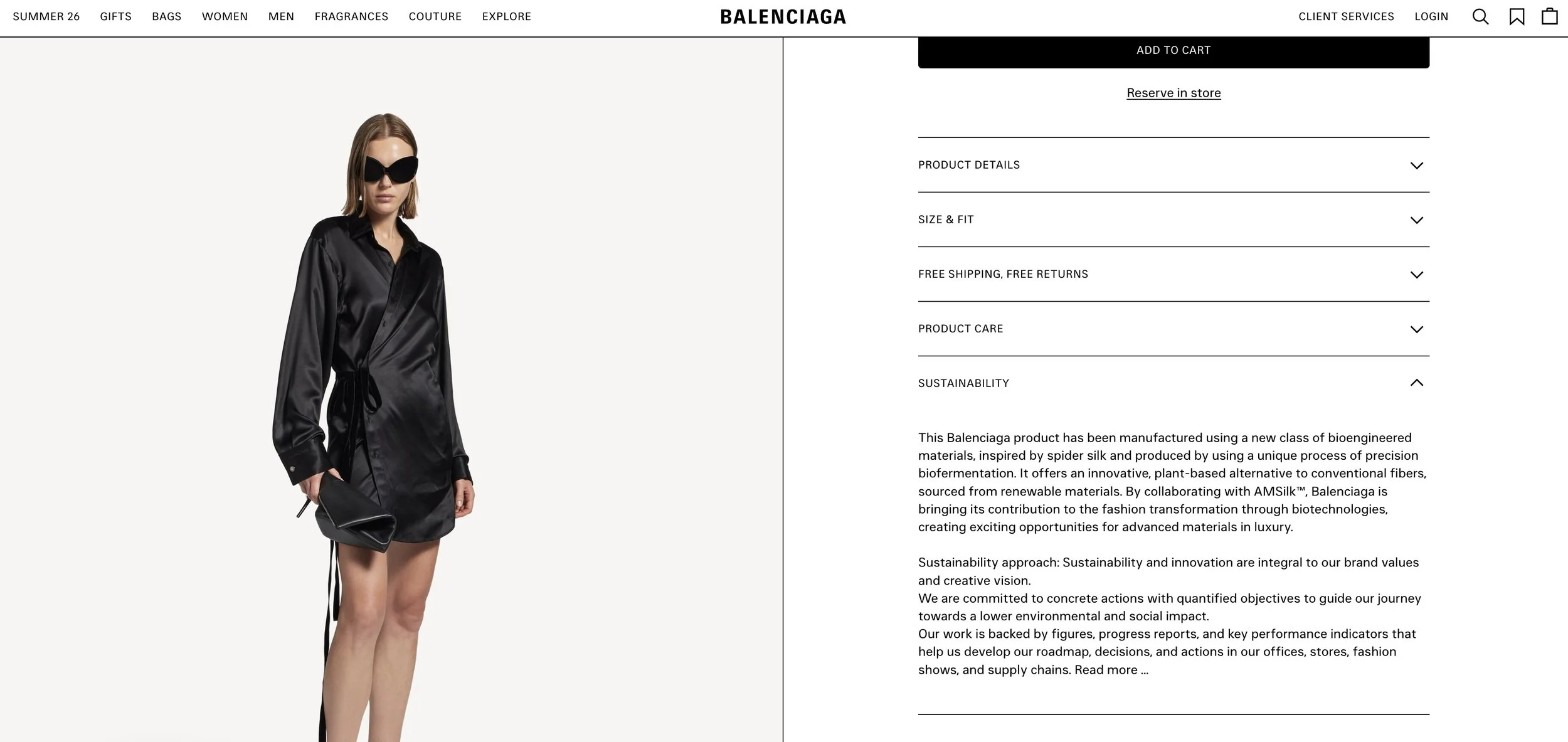
A screenshot from Balenciaga’s website, in which AMSilk is described and named on their sustainability dropdown.
Ingredient Branding vs. material storytelling
Isabel was also candid about why AMSilk isn't pursuing consumer-facing ingredient branding on its own, “Ingredient branding involves such a lot of resources…” And more fundamentally, “If the brands are not willing, you won't get the story out without them.” This is the reality that most biomaterials companies face. Ingredient branding in this sector is not a unilateral strategy… it requires brand cooperation that the material supplier has little power to compel. What Balenciaga offered AMSilk wasn't just attribution, it was access to the consumer-facing story that AMSilk cannot tell on its own.
Others within AMSilk offer a useful counterpoint, stating they don’t believe ingredient branding will play a decisive role at the luxury tier. A customer buying Chanel is buying the brand’s reputation and promise of craftsmanship, not the material itself. The ingredient is invisible by design. At the commodity end of a market, on the other hand, ingredient branding can be a powerful differentiator and is how a consumer chooses one functionally similar product over another.
However, luxury is also the category with the longest tradition of material storytelling: think of cashmere or silk. These aren't ingredient brands, but they are material narratives that carry consumer meaning. A customer who pays more for cashmere is paying for an understanding and a perception about the material itself. That narrative wasn't built by a single supplier's marketing campaign, but rather by many years of association between the material and its quality, scarcity, sourcing, and craft. Whether bioengineered materials can generate that same kind of desire, where the science itself becomes part of the allure, is an open question. The novelty of precision fermentation and bioengineered proteins has a narrative charge that conventional materials sourcing doesn't.
The Emerging Value Drivers
When AMSilk was founded in 2008, the pitch was a scientific novelty. As sustainability became a market force, the narrative shifted accordingly. Now the conversation is shifting again, and the new value drivers are ones that most biomaterials companies aren't yet positioned to talk about.
“It's not only sustainability,” Isabel said. “The textile industry has several problems. It has supply chain issues, with volatile supply chains now with a lot of conflicts around the world. So they want to have production back nearshore.” AMSilk's European value chain, with fermentation in Slovakia through Evonik and processing within the EU, fits a ‘resilient Europe’ proposition that didn't exist as a buying criterion five years ago. For luxury houses based in France and Italy, a fully European supply chain is a logistical and geopolitical advantage at a moment when nearshoring has become an active procurement strategy across the industry. Trade restrictions have increased fivefold since 2015, and Asia-to-US shipping costs spiked 165% between December 2023 and February 2024. Brands have been responding by diversifying production to avoid chokepoints, and nearshoring to minimize shipping costs. Furthermore, the current conflict in Iran and subsequent closing of the Strait of Hormuz has led to unprecedented supply chain risk along with increased oil costs, which impact shipping fares. In light of this, a proposition of a geographically contained supply chain is extremely attractive.
This is a value driver that the biomaterials sector has been slow to articulate. Most companies in the space still lead with sustainability in their positioning, because that's the narrative that attracted their initial funding and their early brand interest. But the brands themselves are already asking different questions. They're asking about supply chain transparency, production predictability, regulatory readiness, and geographic risk. A biomaterials company that can answer those questions has a commercial argument that doesn't depend on the customer caring about sustainability at all. That's a significant shift, and it reframes what “value” means in this sector: not just lower environmental impact, but lower operational risk.
Closing
AMSilk is not a model that generalizes easily. Fifteen years of development, asset-light scaling through an established chemical company, credibility earned in automotive and aerospace before luxury fashion came calling…most biomaterials startups don't have that runway, and most investors wouldn't fund it. But the partnership does clarify commercial arrival necessities in this sector: proof that precedes story, production capacity that can meet luxury-grade due diligence, internal champions willing to push through unfamiliar materials, and enough leverage to negotiate an ongoing relationship rather than a one-season capsule.
The companies I profiled in Part 1 of The $300M Wake-Up Call had visibility, funding, and brand partnerships. However, they were also predominantly next-gen leather alternative companies. Alt-leathers, in particular, have thus far competed on parity with a heritage material instead of on a performance breakthrough. And, should a performance breakthrough be noted, it is in comparison to lesser materials, like less-advanced leather alternatives or pleathers, rather than leather itself. With a successful next-gen leather alternative, the value proposition is invisible at the point of sale, which means every ounce of credibility has to be earned through consistency, hand-feel, and durability before anyone will listen to a sustainability story.
AMSilk sidesteps much of this in its category. They haven’t had to fight the aesthetic paradox that haunts leather alternatives: the better you replicate traditional leather, the harder it is to explain why anyone should care. In the silk category, there are already many synthetics and blends that compete on price and performance. While AMSilk's commercial fashion breakthrough is worth both celebrating and studying, it is competing in a different category than the alt-leathers that have dominated the biomaterials conversation and absorbed the most capital and the most visible failures in this category.
“We do not want to be considered as an alternative actually,” Isabel said. “Try to think the different way and say it's a completely new material. Why not think about what can we make out of it without always comparing it to what already exists? It's not tomorrow's silk. It could be a completely new kind of material for tomorrow.”
Image provided by AMSilk.
Even AMSilk's positioning isn't as clean as it might appear. Isabel told me that AMSilk frames itself as “a completely new class of material”, not a silk alternative but something that should be evaluated on its own terms. I agree with this approach. Next-gen materials ARE a new class of material and should be described as such. Yet Balenciaga's own product descriptions reads “advanced biotech silk satin.” That language doesn't signal a new category; it signals a high-tech version of something familiar (are they moving full-circle to the “Spider-Man” narrative again?). Whether that's a deliberate commercial translation and an attempt at meeting consumers where they are and in terms they already understand, or whether it reveals that even sympathetic brand partners default to replacement framing, is an open question. But it suggests that the “new class of material” positioning, however earned internally, faces the same gravitational pull toward comparison that many biomaterials eventually encounter. Brands look at their list of silk blouses and ask “what can we use instead?” rather than “how can this new material inform our design?”. The material doesn't enter the design process as a new capability. It enters the procurement process as a substitution.
This is where the Gore-Tex comparison, which has shadowed the biomaterials conversation from the beginning, becomes the most instructive and the most limiting. Gore-Tex succeeded as an ingredient brand because it offered a mechanical function that consumers could feel, name, and verify: waterproof and breathable. It wasn't replacing an existing material; it was delivering a capability that didn't exist before. Designers and product developers pulled it into their work because it let them make things they couldn't otherwise make. Biomaterials’ advantages of lower carbon footprint, supply chain resilience, and biodegradability are legible only to procurement teams, not to consumers or designers. Until a biomaterial can offer a functional promise that a designer can act on and a consumer can feel, replacement framing may not be a messaging failure the sector can correct. It may be a structural inevitability of materials whose primary advantages aren't experienced by the people choosing or wearing them.
And that leads me to the question that has been haunting this category: Will biomaterials ever escape replacement framing?

About the Author
Jenny Erwin is a strategic marketing consultant working at the intersection of next-generation materials, marketing, and commercialization. Her master's thesis explored go-to-market strategies for cell-cultured leather in the equestrian luxury saddle market, including primary consumer research, and comprehensive competitive analysis of biomaterial technologies. She holds a BFA in Advertising and an MA in Luxury and Brand Marketing (Summa Cum Laude) from SCAD, and previously founded sustainable fashion brand Apacceli, which launched at the 2018 World Equestrian Games, showed collections at New York and Paris Fashion Weeks, and was invited to collaborate with Macy’s on a 2019 collection for their Market at Macy’s initiative.